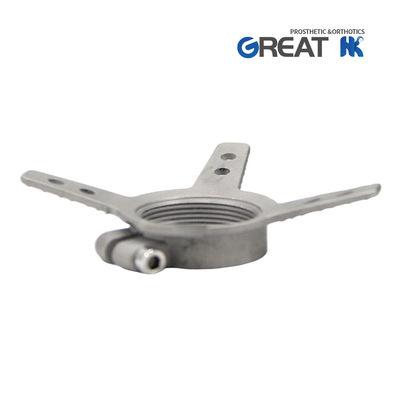
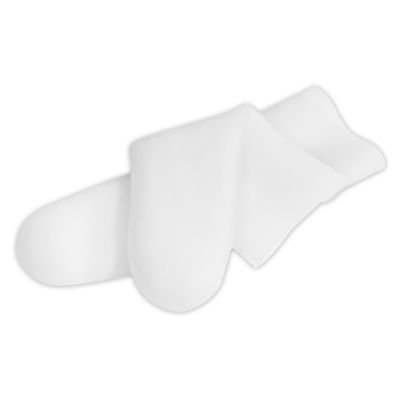
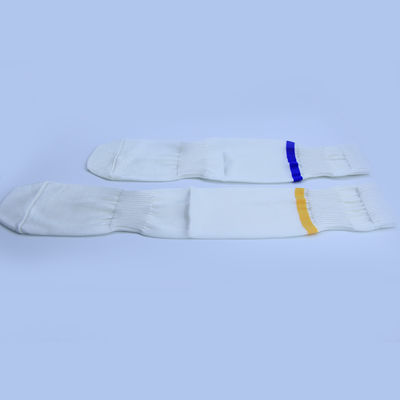
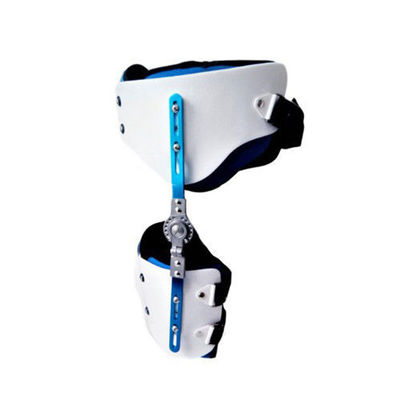
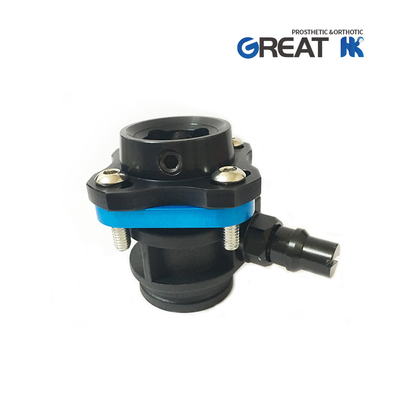
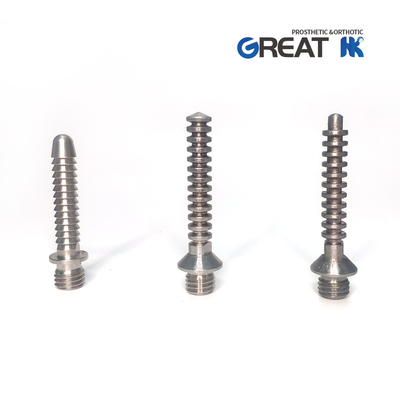
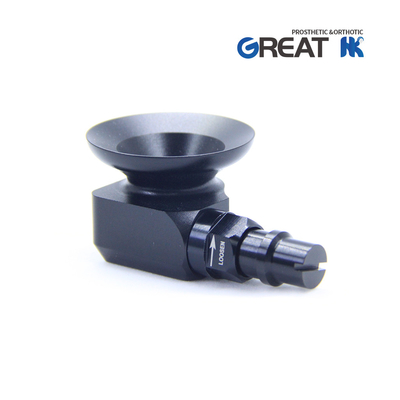
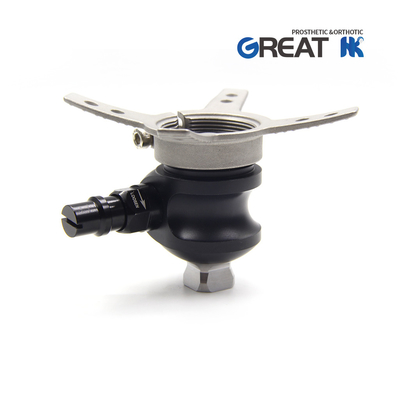
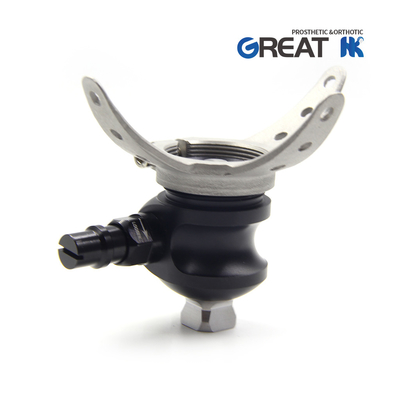
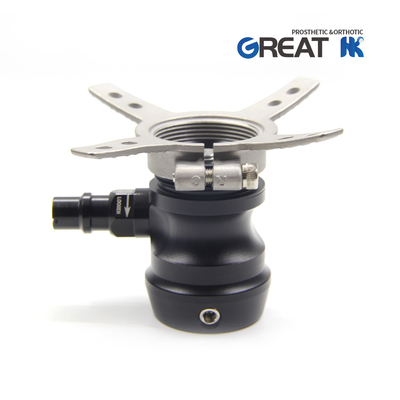
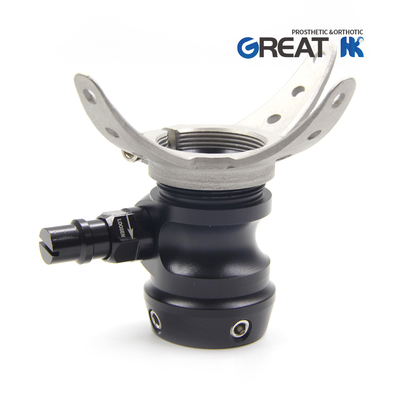
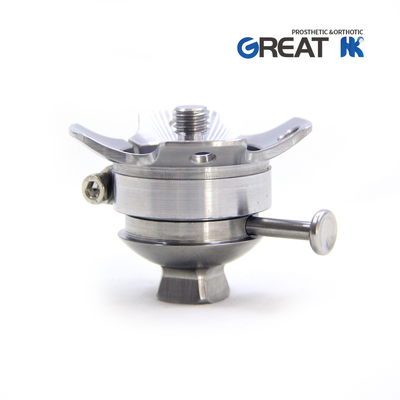
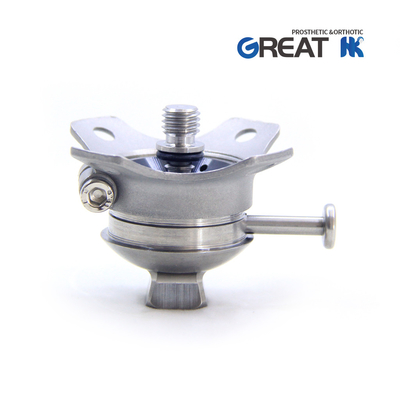
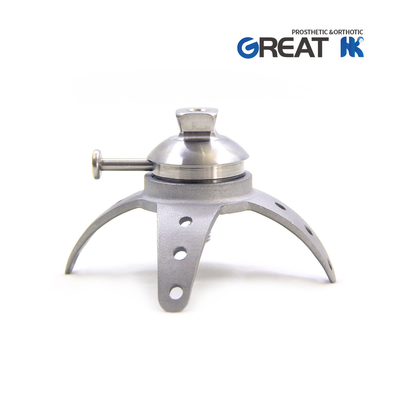
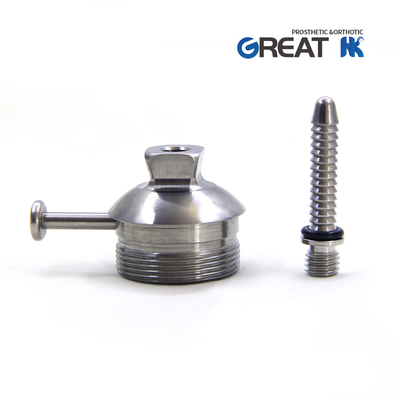
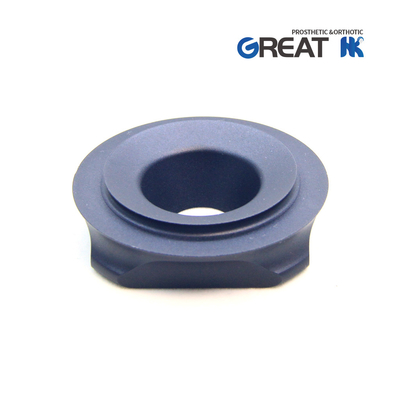
Four Bar Linkage Knee Joint with tube clamp stainless steel/ Titanium 100Kg

5
MOQ
USD 60~40 pcs
Price
Four Bar Linkage Knee Joint with tube clamp  stainless steel/ Titanium 100Kg
Features Gallery Product Description Request A Quote
Features
Specifications
Knee Joint: Tube Clamp Four Bar
Material: Stainless Steel / Titanium
Max Load: 100Kg 220Lbs
Basic Infomation
Place of Origin: CHINA
Brand Name: HK PROS
Certification: CE ISO 13485
Model Number: CHG-09S
Payment & Shipping Terms
Packaging Details: cartons 53*23*29(cm) 53*29*37(cm)
Payment Terms: TT/LC, Western Union, MoneyGram
Supply Ability: 100000pcs
Product Description

Polycentric                                           

• with integrated extension assist

• suitable for max. 100 kg body weight

Recommendation:

• for trans-femoral amputees

• with moderate functional levels

• medium stance phase stability

• medium swing phase control

• suitable also for hip disarticulation amputees

• not suitable for amputees with higher functional levels

Description:

Upper and lower joint section is connected with linkage bars. The stance phase stability is

achieved with the polycentric kinematic ( adjustment of the instant center of rotation by

adjustment of the stop). The stepless adjustment of the axis friction and of the extension

assist spring controls the swing phase.

Technical Data:

• Knee flexion range: approx. 120°


Product  Number

Material

Standard

Part  Weight

Weight  Limit

CHG—09S

S.Steel

703g

220lbs


manual instruction

1.Description and Function


The Four Bar Linkage Knee Joints CHG-09S are polycentric knee joints. The center of rotation changes its position, dependent on the degree of flexion (Fig.1). The joint provides a rotational and translational movement due to its polycentric action. So the joint close to the real characteristics of the knee of people. People who fit this kind of knee can get well walking. In the extended position the instantaneous center of rotation is located above the joint and posterior to the weight bearing line, thus providing knee stability in the stance phase (see Section 3). During flexion the center of rotation decline sharply with flexion and back to the usual position of knee axis so that patient can kick easily and without appearance problem when sitting.

Four Bar Linkage Knee Joint with tube clamp  stainless steel/ Titanium 100Kg 0

2.Alignment


The staring point for correct alignment is the determination of the individual weight bearing line and transfer of these values to the components in the prosthesis according to the illustrated alignment recommendations (Fig.2). Function of the joint is influenced by the position of the axes.Thus when providing basic alignment, the two lower axes should create a horizontal line from the lateral aspect


3.AdjustingStance Phase (Fig.3)


Turn the Adjustment Screw and vary the position of the center of rotation according to the individual requirements of the patient. Put the center of rotation forward make flexion easier but decrease stability. Inversely, put the center of rotation backward increase stability but make flexion harder. Use a 4mm hex head wrench.Clockwise rotation=decrease stability of the joint (initiation of flexion becomes easier). Counter–clockwise rotation = increase stability (initiation of flexion becomes harder).

Four Bar Linkage Knee Joint with tube clamp  stainless steel/ Titanium 100Kg 1

4.Setting Swing Phase Speed with Axis Friction Adjustment (Fig.4)


Setting swing phase speed by adjusts the axis friction (resistance to motion) using enclosed wrench, and turn cap screw using a 5mm hex head wrench. Clockwise rotation = increase friction = decrease Swing Phase Speed. Counter-clcokwise rotation = decrease friction = increase Swing Phase Speed Adjustments of as little as 5° to 10° provide a preceptible change.
Four Bar Linkage Knee Joint with tube clamp  stainless steel/ Titanium 100Kg 2Four Bar Linkage Knee Joint with tube clamp  stainless steel/ Titanium 100Kg 3

5.Regulating the Swing Phase with Extension Assit Adjustment(Fig.5)


Adjust the tension of the spring for Extension Assist by turning the Adjustment Screw.Use a 4mm hex head wrench. Clockwise rotation Clockwise rotation = increase the tension of the spring = increase Swing Speed. Counter-clcokwise rotation = decrease the tension of the spring = decrease Swing Speed. Adjust the tension of the spring need in concert with axis friction adjustment depth of the adjustment screw in the spring housing should not exceed 8mm.


6.Technical Data


Structure height 37mm(from axis center to upper edge)

Overall height 108mm(form pyramid to pyramid)

Maximum flexion angle 120°

Recommended Products
Get in touch with us
Characters Remaining(20/3000)